



The recovery, which gathered pace in the third quarter, has given the company confidence to accelerate product launches. According to Tata Motors Managing Director and Chief Executive Girish Wagh, the improvement has been broad-based, cutting across vehicle segments and customer categories.
It may be noted here that industry-wide registrations rose by 25.8 per cent between the second and third quarters, while Tata Motors’ volumes grew faster, at 29.4 per cent.
That outperformance has translated into higher market share. Tata Motors now commands 35.7 per cent of the overall commercial vehicle market, with a dominant 56.7 per cent share in the heavy vehicle category of 28 tonnes and above. For a sector that has endured years of uneven demand, the turnaround is notable.
Wagh attributes the recent surge primarily to GST 2.0 but stops short of calling it a sustained cycle yet. Three months of strong performance, he says, is encouraging, though it will take six to seven months of consistent year-on-year growth to confirm a lasting shift.

Even so, the outlook remains upbeat. With one quarter of post-GST 2.0 data already behind it, the company is optimistic that the current momentum can carry forward, PTI reported quoting Wagh.
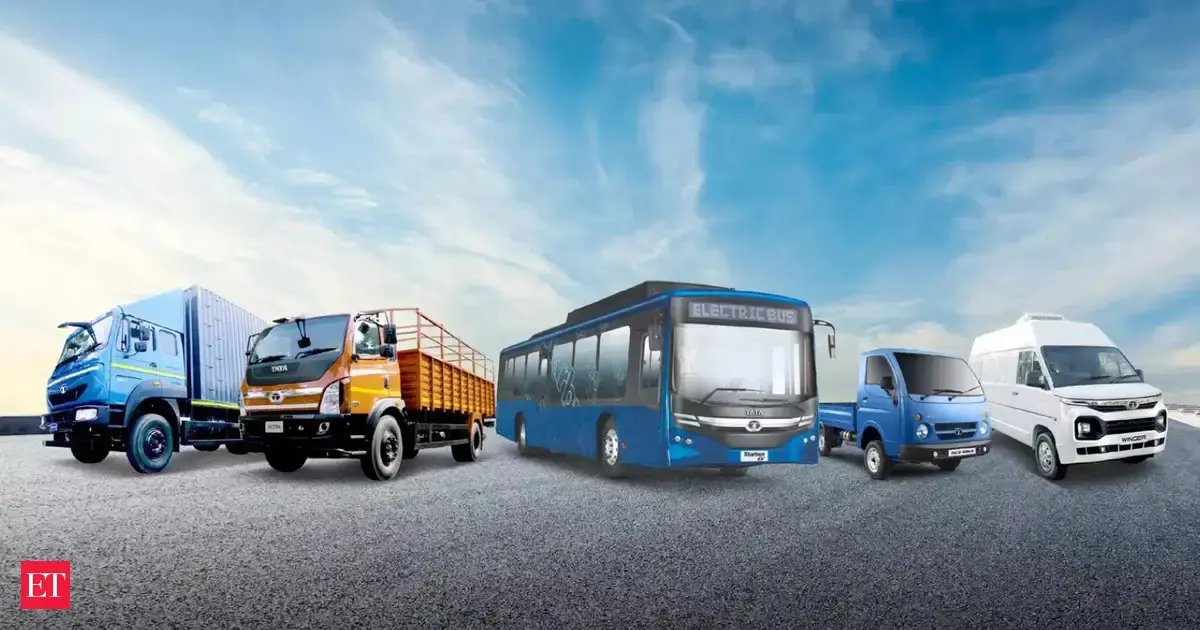
Central to Tata Motors’ strategy is a new portfolio of 17 next-generation trucks. These include electric models built on its Intelligent Modular Electric Vehicle Architecture, or I-MOEV, alongside upgraded diesel platforms. The company, which already has a presence in electric last-mile delivery vehicles, is now extending electrification into heavier truck segments.Under the Tata Trucks.ev brand, the electric range spans payloads from 7 to 55 tonnes. The vehicles have been developed in close collaboration with customers and tested extensively in real-world conditions. Over the past few years, they have collectively covered more than 3.5 lakh kilometres, operating for six to nine months across sectors such as steel, cement, chemicals, e-commerce and auto components.
This groundwork, Wagh says, gives the company confidence that the trucks are ready for commercial deployment. The aim is not just to sell vehicles, but to support a gradual decarbonisation of freight transport, especially in industries with heavy logistics footprints.
At the same time, Tata Motors is refreshing its internal combustion engine offerings. The all-new Azura range, along with updates to the Signa, Prima and Ultra platforms, is positioned around higher load capacity, improved fuel efficiency and better safety. These factors, the company argues, directly affect operator profitability, a key concern in a cost-sensitive market.
Safety, in particular, has become a stronger focus. The entire truck portfolio has been upgraded to meet Euro crash norms under the ECE R29 03 standard. Cabins are engineered to withstand full frontal, rollover and side impacts, and the vehicles incorporate up to 23 India-specific advanced active safety features. These include adaptive cruise control, lane departure warning and collision mitigation systems, technologies that were once rare in domestic trucks.
The expansion comes at a time when cost pressures are building. Non-ferrous commodities such as copper, along with precious metals like platinum and rhodium, have pushed up input costs for the industry. Tata Motors implemented a 1 per cent price increase from January 1 and is monitoring the situation closely. For now, the company says its new launches are entering the market with only marginal price hikes.
Financially, the recent demand revival is already visible. In the quarter ended December 2025, Tata Motors sold 1,15,577 commercial vehicles, up 21 per cent from 95,770 units a year earlier. The company believes this provides a strong base as it enters the current quarter, even as it remains cautious about overinterpreting short-term trends.

