



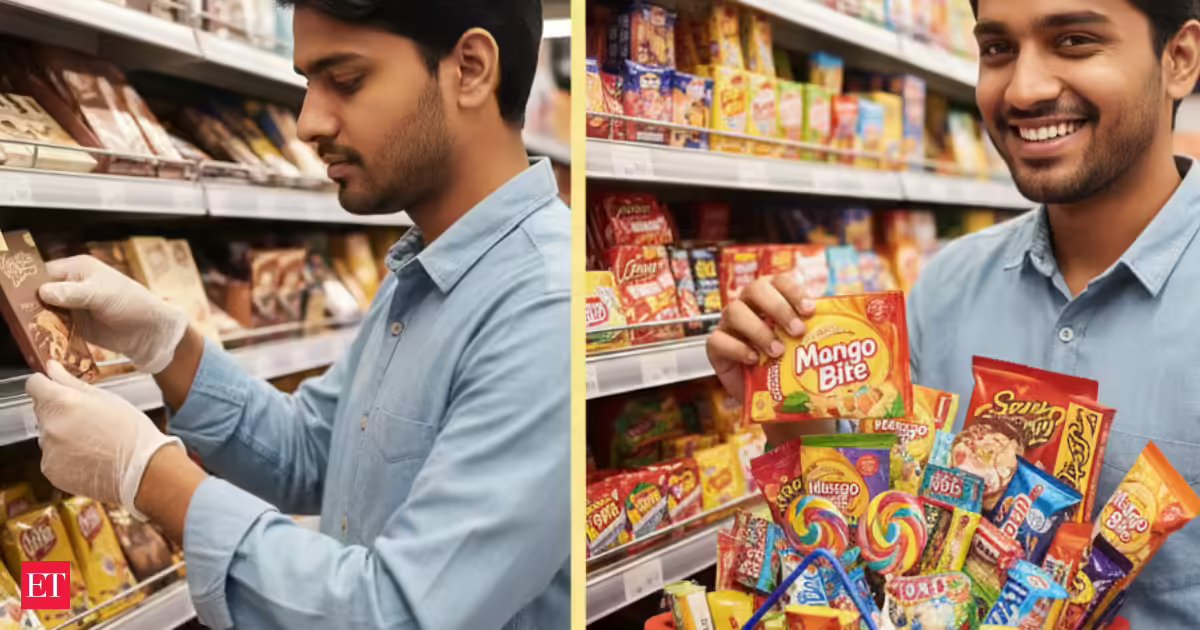
Mondelez and Perfetti each posted a 2% decline in India sales in FY25. Hershey’s India growth was flat, while Mars International’s revenue rose just 2%.
Chocolates and candies sell well during slowdown as they offer small comforts with households cutting back. However, record high cocoa prices in 2024 and early 2025-touching $12,000 per metric tonne in April 2024 after hovering near $2,500 for many years-led to price hikes in chocolates, pushing shoppers to lower price points. Hundreds of regional manufacturers flooded local markets with hard-boiled candies, offering higher trade margins and aggressive discounts, industry insiders said.


“There are hundreds of such regional players, and their combined impact is now showing up in the financials of large confectionery companies,” said Mayank Shah, vice-president at biscuits and toffee maker Parle Products. “In chocolates, people downgraded to smaller packs while candies saw massive trade discounting at general trade by smaller regional companies,” he said. While cocoa prices have eased to about $5,000 a tonne, they are still more than double of the long-term prices.
Companies cut grammages instead of sharply hiking prices, prompting consumers to trade down. That, in turn, led to domestic players pushing local innovation in the market with better trade terms with retailers. Prayagh Consumer, maker of Cintu candies crossed ₹900 crore in revenue with double-digit growth in FY25. DS Foods, which sells the Pulse candy brand, expanded sales to about ₹750 crore.
Rajiv Kumar, vice-president at DS Group, claimed that consumer preferences are also changing in favour of local brands, with a gradual shift from western formats and taste profiles like caramel and chocolates to local flavours.
“Indianness is cool today,” he said. “Pulse’s success stems from a combination of consumer insight, product innovation, pricing, distribution strength, and emotional connection. The brand resonates with Indian palates, drawing from culture, childhood tastes, and nostalgia.” India’s chocolate and confectionery market is about ₹25,000 crore, split almost equally between chocolates and sugar confectionery. Per-capita chocolate consumption remains low at around 200 grams a year, compared with more than 10 kg in the UK, indicating long-term growth potential.
Executives said demand has been stronger in the current fiscal as input costs cool and pricing resets.
“We do see some short-term pressure (in India) but we believe that things will be okay going forward,” Mondelez global chairman and chief executive officer Dirk Van de Put told analysts last year. “India, in fact, is doing well…performing better than we expected.”
In the July-September quarter, Mondelez’s India business grew at a mid-single-digit rate despite disruptions linked to goods and services tax changes, he said.

